After the windy stormy weather of the previous day I was concerned as I picked up Dick, Nancy, Al and Alice that we would also be affected by the weather on our day out. As it was we were lucky and the only rain we encountered was as we were driving to Prastio Kellakiou late in the afternoon. It was a great day out in interesting company, visited several sites around Limassol and found a total of 75 different species the most notable of which were:
Germasogeia Dam – Squacco Heron, Osprey, Spotted Crake, Little Crake, Stock Dove, Roller, Hoopoe, Cyprus Wheatear, Cyprus Warbler
Phassouri Reed Beds – Squacco Heron , Glossy Ibis, Water Rail (h), Turtle Dove, Great Reed Warbler
Two great days birding with Steve and Claire who were visiting Cyprus again. Last year we had visited many of the sites around Larnaca as well as spent an afternoon at Makhairas. This year we visited Cape Greco, Paralimni Lake, Panagia Stazousa, Germasogeia Dam and the Akrotiri Peninsula.
Day one – Thursday 3rd April
We visited Kermia Beach, Cape Greco, Paralimni Lake and Panagia Stazousa. We found many migrants at Cape Greco including Ruppell’s Warbler, Eastern Bonelli’s Warbler, an early Wood Warbler, Whinchat, Common Nightingale, Wryneck, Ortolan and Cretzschmar’s Bunting as well as one male and two female Pallid Harrier and were pleasantly surprised to see an overflying Osprey and light morph Booted Eagle. We found singing male Cyprus Warbler and Cyprus Wheatear and several Spectacled Warbler. We had several Isabelline, Northern and Eastern Black-eared Wheatear and three Woodchat Shrike. A quick visit to Paralimni Lake proved to be an obstacle course around road works but we were rewarded with a Glossy Ibis on arrival which soon flew off to join thirteen others that flew over.
Although it looked as if it may rain we then headed just west of Larnaca to the area know as Panagia Stazousa. Here we were treated to the sight of two pairs of Great Spotted Cuckoo trying to outwit several Magpies. There were also three Common Cuckoo (one a rufous morph) flying around the area near to Pyrga as well as two Eurasian Hoopoe. We also heard a calling Scops Owl.
Day two – Friday 4th April
On leaving Larnaca we stopped to check out some waders in a pool near the old airport buildings. There were many Ruff, a few Common Ringed Plover, some Black-winged Stilt, a Common Greenshank and a Black-tailed Godwit. There was a Common Greenshank at Germasogeia Dam and despite the fact we also found three (at least) singing male Cyprus Warbler there, the star of the location (and the day I think) was a Spotted Crake. Even though it preferred to stay in the reeds we still managed to get really good views of it. At Akrotiri Gravel Pits we spend most of our time around Agios Georgios Church where we found a female Subalpine Warbler, a couple of Eastern Bonelli’s Warbler, a male and female Common Redstart, an Eastern Orphean Warbler and a male Cretzschmar’s Bunting. Lesser Whitethroat and Blackcap were everywhere.
At Phassouri Reed Beds we found a Squacco Heron, several Cattle and Little Egret and seven Glossy Ibis. Lady’s Mile was almost devoid of birds, so we braved a very windy Zakaki Marsh which held a Water Pipit, several Wood Sandpiper, at least ten Little Ringed Plover, several feldegg Yellow Wagtail and all too briefly a male Citrine Wagtail came out from the reeds but only Steve and I were able to see it clearly. We waited a while hoping it would return for Claire to see it but we were disappointed.
That finished our two days out and we headed back to Larnaca. Thanks to Steve and Claire for their company again this year.
Total species – 90
Little Grebe (h), Squacco Heron, Cattle Egret, Little Egret, Grey Heron, Glossy Ibis, Greater Flamingo, Eurasian Teal, Mallard, Common Shelduck, Western Marsh Harrier, Pallid Harrier, Common Buzzard, Booted Eagle, Osprey, Common Kestrel, Chukar, Black Francolin, Spotted Crake, Common Moorhen, Eurasian Coot, Black-winged Stilt, Little Ringed Plover, Common Ringed Plover, Spur-winged Lapwing, Ruff, Common Snipe, Black-tailed Godwit, Common Greenshank, Green Sandpiper, Wood Sandpiper, Common Sandpiper, Yellow-legged Gull, Rock Dove, Common Woodpigeon, Eurasian Collared Dove, Eurasian Scops Owl (heard), Great Spotted Cuckoo, Common Cuckoo, Common Kingfisher, Common Swift, Eurasian Hoopoe, Eurasian Wryneck, Crested Lark, Barn Swallow, Red-rumped Swallow, Common House Martin, Tawny Pipit, Tree Pipit, Water Pipit, Yellow Wagtail – feldegg, Citrine Wagtail, Grey Wagtail, White Wagtail, Common Nightingale, Common Redstart, Whinchat, Isabelline Wheatear, Northern Wheatear, Cyprus Wheatear, Eastern Black-eared Wheatear, Cetti’s Warbler, Zitting Cisticola, Sedge Warbler, Spectacled Warbler, Subalpine Warbler, Sardinian Warbler, Cyprus Warbler, Ruppell’s Warbler, Eastern Orphean Warbler, Lesser Whitethroat, Common Whitethroat, Eurasian Blackcap, Eastern Bonelli’s Warbler, Wood Warbler, Common Chiffchaff, Great Tit, Woodchat Shrike, Masked Shrike, Eurasian Magpie, Western Jackdaw, Hooded Crow, House Sparrow, Spanish Sparrow, Common Chaffinch, European Greenfinch, European Goldfinch, Ortolan Bunting, Cretzschmar’s Bunting, Corn Bunting
Common Redstart Agios Georgios Church April 4th 2014 (c) Cyprus Birding Tours
Plenty of migrants today at Cape Greco and even my raptor count produced raptors – a European Hobby, a Peregrine Falcon, a female Hen Harrier and at least five Pallid Harrier – two female and three (maybe four) males. Every bush seemed to have something in it and the sound of singing Common Nightingale could be heard throughout the area.
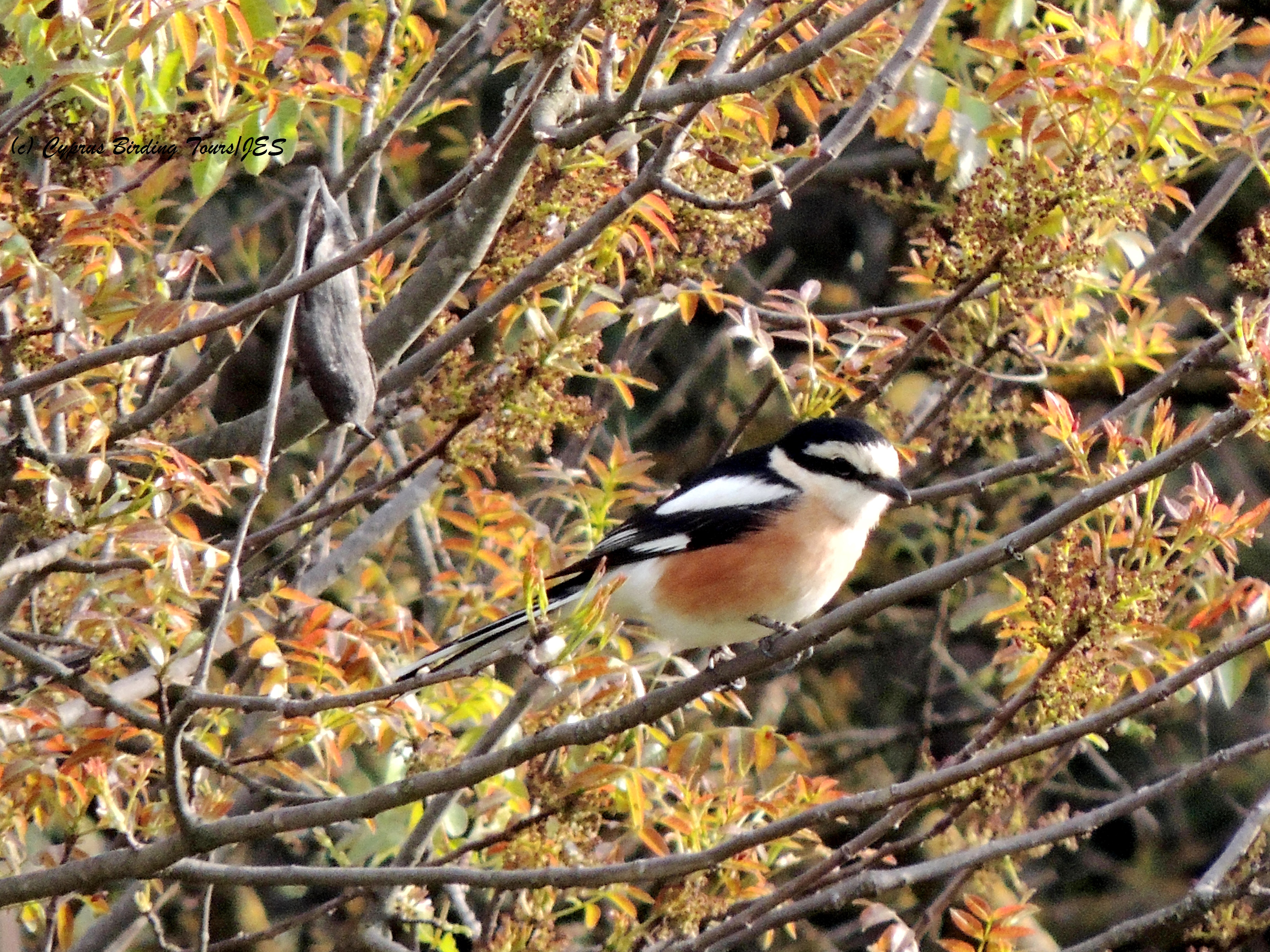
Species around included – Lesser Whitethroat, Blackcap, Eastern Bonelli’s Warbler, Ruppell’s Warbler, Eastern Orphean Warbler, Tree and Tawny Pipit, Isabelline, Northern, Eastern Black-eared and Cyprus Wheatear, Cyprus and Spectacled Warbler, Masked Shrike, Common Cuckoo, thunbergi Yellow Wagtail, Eurasian Hoopoe, Cretzschmar’s and Ortolan Bunting, Wryneck, Whinchat, Common Redstart, Blue Rock Thrush, Masked Shrike, Black-crowned Night Heron and Pied Flycatcher.
Picked up Stuart and Ruth from Pissouri and headed to Kouklia Soakaways. We could hear Sedge, Eurasian Reed and Cetti’s Warbler in the reeds and watched a calling Cyprus Wheatear in a cultivated area. There was very little water in the river bed but we did find a Common Snipe, two Green Sandpiper and a Wood Sandpiper using one of the small pools still around. A Water Rail came out from the reeds for a while and we had great views of it. We could also hear a couple of Common Nightingale singing and saw several Sardinian Warblers and Blackcap. As we left the area a male Eastern Black-eared Wheatear caught our attention.
As we approached Asprokremmos Dam we saw a flock of herons flying over the dam wall. We quickly identified them as Purple Heron and watched as they flew over the carpark appearing to look for a place to roost. A Long-legged Buzzard chose one of the pines to sit in for several minutes and we found several Tree Pipit in the area. We then drove behind towards the aerial pausing to stop and see the resident Little Owl and a breeding pair of Cyprus Warbler. A male Pallid Harrier and female Western Marsh Harrier were overflying. In the carob grove we found both a Common and a Great Spotted Cuckoo and around the aerial we found several pairs of Spectacled Warbler, more Tree Pipit, Spanish Sparrow and Blackcap. Two surprise finds were a Whinchat and an Eastern Olivaceous Warbler – both early arrivals for the end of March.
After lunch at Mandria we found a couple of Isabelline Wheatear and a smart male Northern Wheatear as well as several Red-throated Pipit and Black-headed Wagtail. A male Western Marsh Harrier kept the many birdwatchers in the vicinity entertained and a small group of Black-crowned Night Heron flew north of the area. After being given the location of a Rufous-tailed Rock Thrush at Anarita we decided not to omit that site from the day’s itinerary and headed there. True to form there was no sign of the bird at the designated location and despite a search we couldn’t find it. We decided to carry on through the area and return there again on our way out. In what at first seemed an area devoid of birds we found a Eurasian Hoopoe, several Tawny Pipit, a male Ruppell’s Warbler, an Eastern Bonelli’s Warbler, a Common and several Lesser Whitethroat, many Chiffchaff, two Cretzschmar’s Bunting and lots of Corn Bunting. A Stonechat displaying the features of the Siberian race was flying around the area although I was unable to get a photograph of it to clinch its ID. A male Western Marsh Harrier was also quartering the fields.
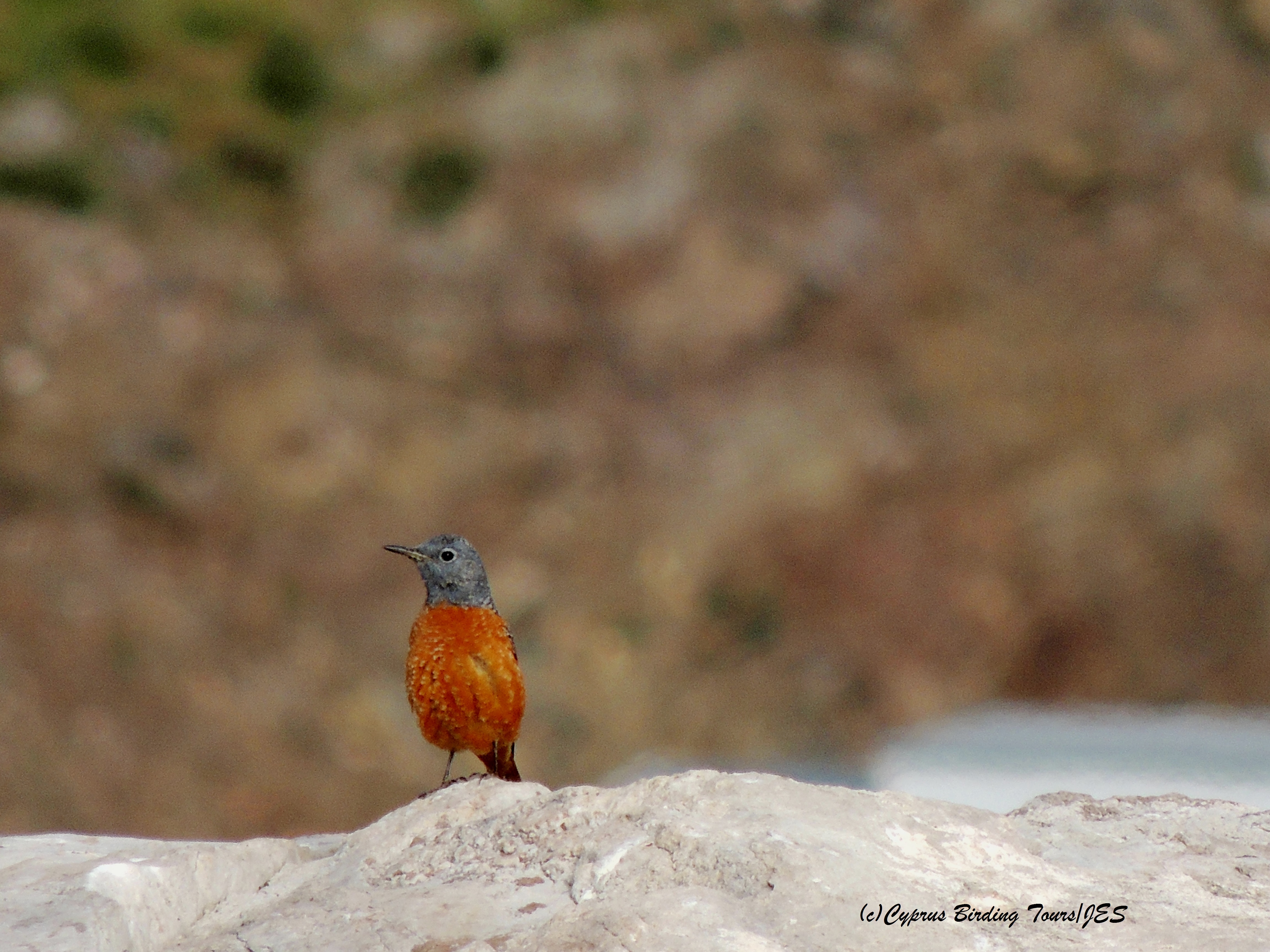
We headed back to the area of our previous search for the Rock Thrush and this time it was waiting for us sitting on a large boulder! It allowed us to take photos and watch it for at least fifteen minutes. That seemed to finish the day on a high but we then managed to add four Greater Spotted Cuckoo in the field near the main road out of the area as well as a male Hen Harrier. A day full of some very interesting and co-operative birds!
Total number of species – 69
Great Cormorant, Black-crowned Night Heron, Little Egret, Purple Heron, Western Marsh Harrier, Hen Harrier, Pallid Harrier, Common Buzzard, Long-legged Buzzard, Common Kestrel, Chukar, Black Francolin (heard), Water Rail, Common Moorhen, Common Snipe, Green Sandpiper, Wood Sandpiper, Yellow-legged Gull, Common Wood-pigeon, Eurasian Collared Dove, Great Spotted Cuckoo, Common Cuckoo, Little Owl, Common Swift, Alpine Swift, Eurasian Hoopoe, Crested Lark, Barn Swallow, Red-rumped Swallow, Common House Martin, Tawny Pipit, Tree Pipit, Meadow Pipit, Red-throated Pipit, Yellow Wagtail – feldegg, Common Nightingale, Whinchat, ‘Siberian’ Stonechat, Isabelline Wheatear, Northern Wheatear, Cyprus Wheatear, Eastern Black-eared Wheatear, Rufous-tailed Rock Thrush, Cetti’s Warbler, Zitting Cisticola, Sedge Warbler, Eurasian Reed Warbler, Eastern Olivaceous Warbler, Spectacled Warbler, Sardinian Warbler, Cyprus Warbler, Ruppell’s Warbler, Lesser Whitethroat, Common Whitethroat, Eurasian Blackcap, Eastern Bonelli’s Warbler, Common Chiffchaff, Great Tit, Eurasian Magpie, Western Jackdaw, Hooded Crow, House Sparrow, Spanish Sparrow, European Serin (heard), European Greenfinch, European Goldfinch, Common Linnet, Cretzschmar’s Bunting, Corn Bunting.
Rufous-tailed Rock Thrush Anarita Park March 31st 2014 (c) Cyprus Birding Tours
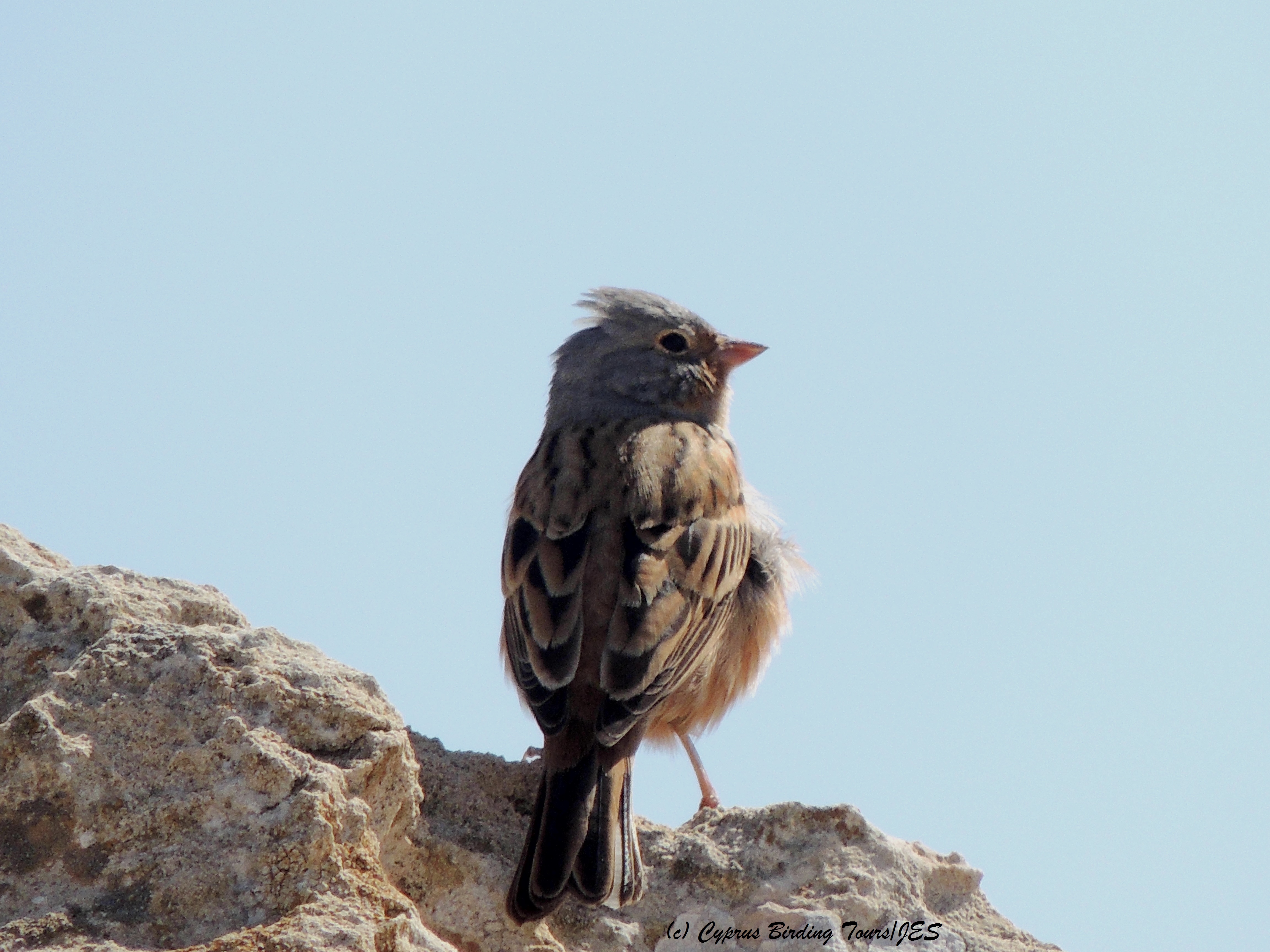
Corn Bunting Anarita Park 31st March 2014 (c) Cyprus Birding Tours
It was good to see both a Yellow Wagtail (feldegg race) and a Cretzschmar’s Bunting on a long-over due visit to my local patch in Nicosia this morning. Also on Manglis Lake were a couple of Little Grebe, a single Coot and a Little Grebe. Several Common Swift were flying over and coming down to drink from the water’s surface and Barn Swallow and House Martin were collecting mud from the water’s edge. A Black Francolin was calling and a male Serin was singing from a tamarisk bush.
Luckily the dust cleared at Cape Greco early on this morning and although again there was little evidence of the raptor migration I was looking for there was a noticeable movement of gulls offshore as well as a good collection of spring migrants and evidence that the breeding season is now underway.
A Peregrine Falcon was in the area and a female Marsh Harrier was resting on the ground near the Sea Caves in the afternoon. Nearly two hundred Yellow-legged Gull passed round the Cape during a four hour watch in the morning and there were five Lesser Black-backed Gull in with them – three Heuglin’s or Siberian Gull and two Baltic Gull. For five minutes a Common Cuckoo was calling across the area and two Cyprus Wheatear were singing on their territories as were three Cyprus Warbler and several Spectacled Warbler. I saw a male Spectacled Warbler taking food into a bush – presumably feeding young. House Sparrows were mating, flying around with nesting material and also carrying food.
I came across seventeen Northern Wheatear, fourteen Isabelline Wheatear and twelve Eurasian Hoopoe (six were together on a track). Also seen were four Cretzschmar’s Bunting, a Common Whitethroat, six Lesser Whitethroat, a Great Spotted Cuckoo, three male Blue Rock Thrush and a female Finsch’s Wheatear.
At Oroklini on my way home there were two Baltic Gull on the water and twelve Greater Flamingo. Three Black-tailed Godwit are still present and two male Red-crested Pochard were out in the open looking very smart. At least twenty Black-winged Stilt are now in the area and both Sedge Warbler and Reed Warbler were singing around the new observation platform. A surprise was a Glossy Ibis that flew in just as I was about to leave.
Was really pleased to find a male Desert Wheatear at Petounta yesterday afternoon. Others had been seen at Paphos Headland and Akrotiri Gravel Pits over the last few days. There was also a single Greater Short-toed Lark there as well as two Isabelline Wheatear, four Little Ringed Plover, two Water Pipit, a Hoopoe and a male Black-headed Wagtail. Earlier, near the Desalination Plant at Larnaca there were four Hoopoe feeding together and on Spiros Pool there were two Greater Sand Plover and more than twenty Ruff. Three Sandwich Tern were fishing offshore and a Calandra Lark was in display flight.
Today I was at Cape Greco for my first raptor survey of the spring. No migrating raptors to count but the local Common Kestrel pair were very active and the House Sparrows around the shelter on the top of the view point were happily mating and ignoring me. If it hadn’t been for some migrating Black-headed Gulls and Great Cormorant I could have thought it was a waste of a morning.
Luckily I decided to drive around the area when I finished and was then really pleased to see a male Ruppell’s Warbler and locate a calling Cretzschmar’s Bunting that looked as if it had just come in off the sea. There was a dark-throated female Finsch’s Wheatear nearby and three Greater Short-toed Lark. Plenty of Isabelline Wheatear as well and a single male Northern Wheatear. Another warbler disappearing into a bush could have been a Subalpine Warbler but I didn’t get a good enough view to be certain. I later heard that one had been seen at Mandria today.
On Oroklini Beach on the way home there were two Mediterreanean Gull, three Sandwich Tern and an adult Armenian Gull in with the Black-headed Gull. No Little Gull on the Marsh but there was a Black-tailed Godwit, a Common Redshank, some Spur-winged Lapwing and three Black-winged Stilt.





 Cyprus Birding Tours